Hello everyone! This is Tatyana Bogdanova, a handcraft artist. In this article, I'd like to tell you about the different types of ceramic decoration and my personal favorite style.
Regardless of the decoration method, it all starts with a scrap piece. The potter or foundry worker takes clay, creates a mold. It dries, and then fires it. This means it's not yet a serving plate or wall hanging; it can't be used for eating or decorating. Such an object has high moisture absorption: food residue and dust easily soak into the surface. It's an ideal breeding ground for mold.
Next, the scrap piece is coated with a transparent glaze and sent to the kiln. What happens there? Under the influence of heat, the glassy substance melts and fills the surface. Incidentally, any ceramic dish you use has a glaze. It couldn't be otherwise.
And now about decoration
First, there are overglaze paints. The name says it all: you apply a design to a glazed surface. Almost like paper, except the paints don't soak in. Incidentally, these paints remain virtually unchanged after firing. Decorative plates created using overglaze painting can look very beautiful and interesting, and any color combination is possible. The design itself is flat: if you touch the piece, it's completely smooth.
Speaking of the overglaze method, I want to say a few words about factory-made pottery. We've all used such tableware! Large-scale factories also use overglaze painting, but not by hand. They use decals, a method of transferring a design to the surface. The image is simply printed on a printer loaded with the same overglaze paints. The image is glued on top, and the piece is fired. Absolutely any design can be printed and the tableware can be stamped on an industrial scale.
But machine-made ceramics are immediately noticeable. If you look closely, it becomes clear: the image is printed. Moreover, it usually breaks off unnaturally. And over time, the colors on such pieces fade. And this is not to say that they simply lack soul and uniqueness.
The next painting method is on wet glaze. This means the surface is glazed, but not immediately sent to the kiln; the design is first applied. The resulting image is very durable.
There's also underglaze painting. For this, we take scrap (remember what that is? It's been fired) or dried, unfired ware. We paint it and then cover it with a layer of transparent glaze.
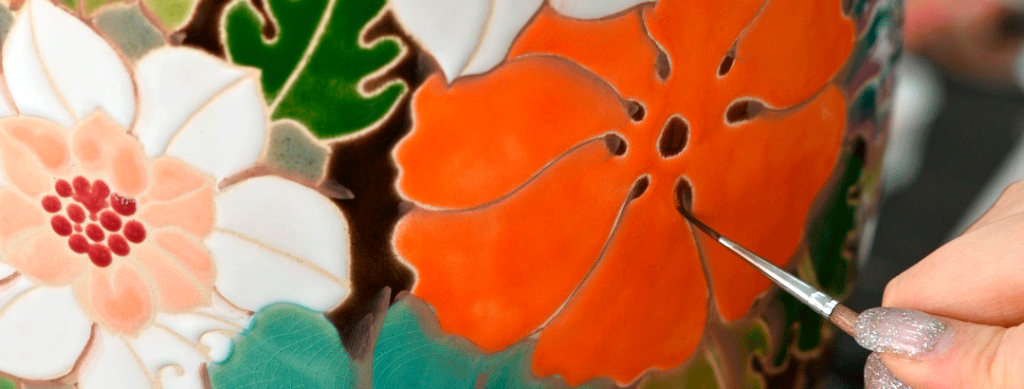
There's also colored glaze painting. You already know that it spreads and melts during firing. To prevent the colors from blending, you need to make grooves—a kind of border.
Every type of painting is unique. The artist chooses the one that best suits their needs. Furthermore, almost all techniques can be combined. The main thing is to consider the temperature required for each of them.
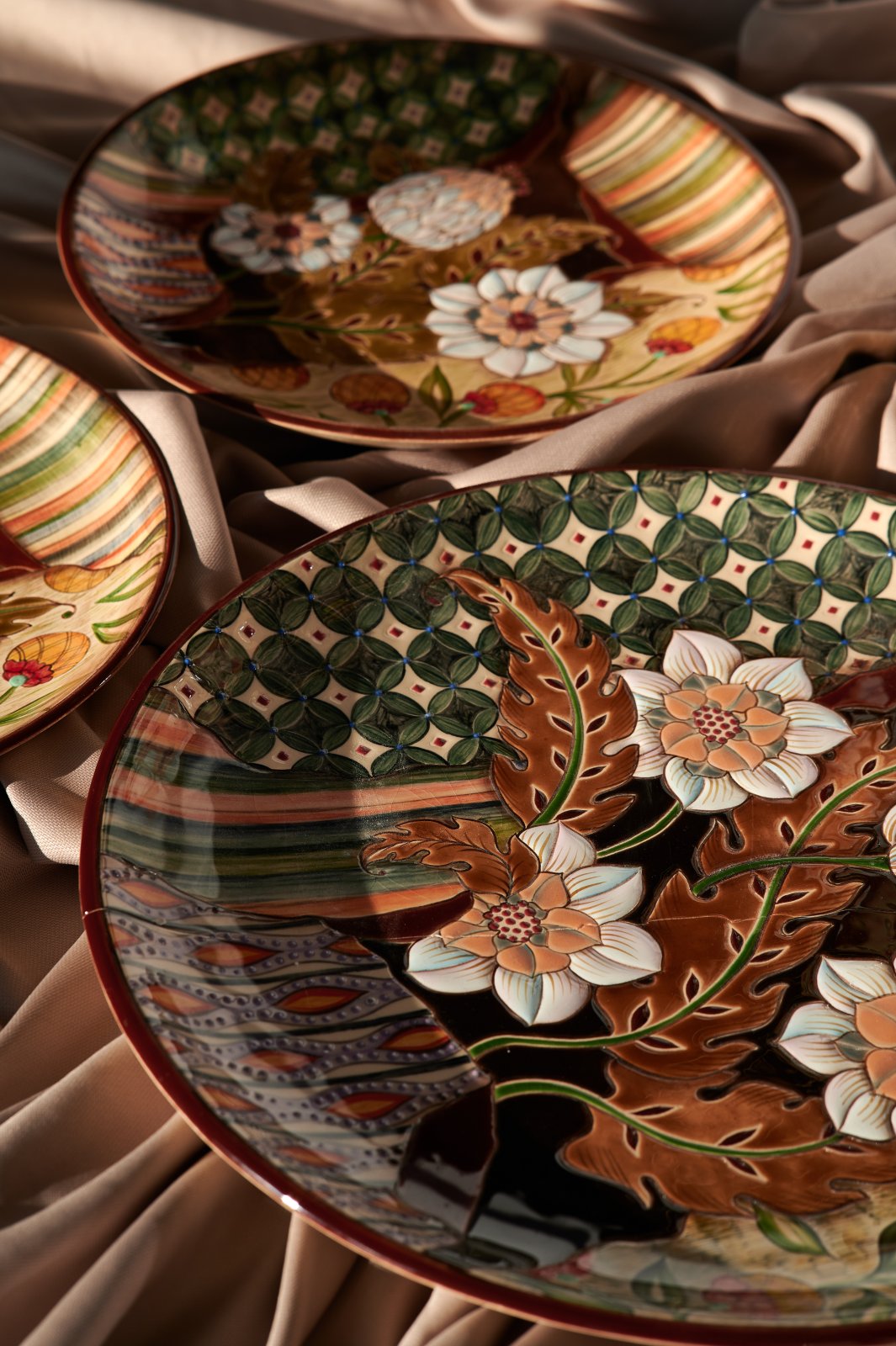
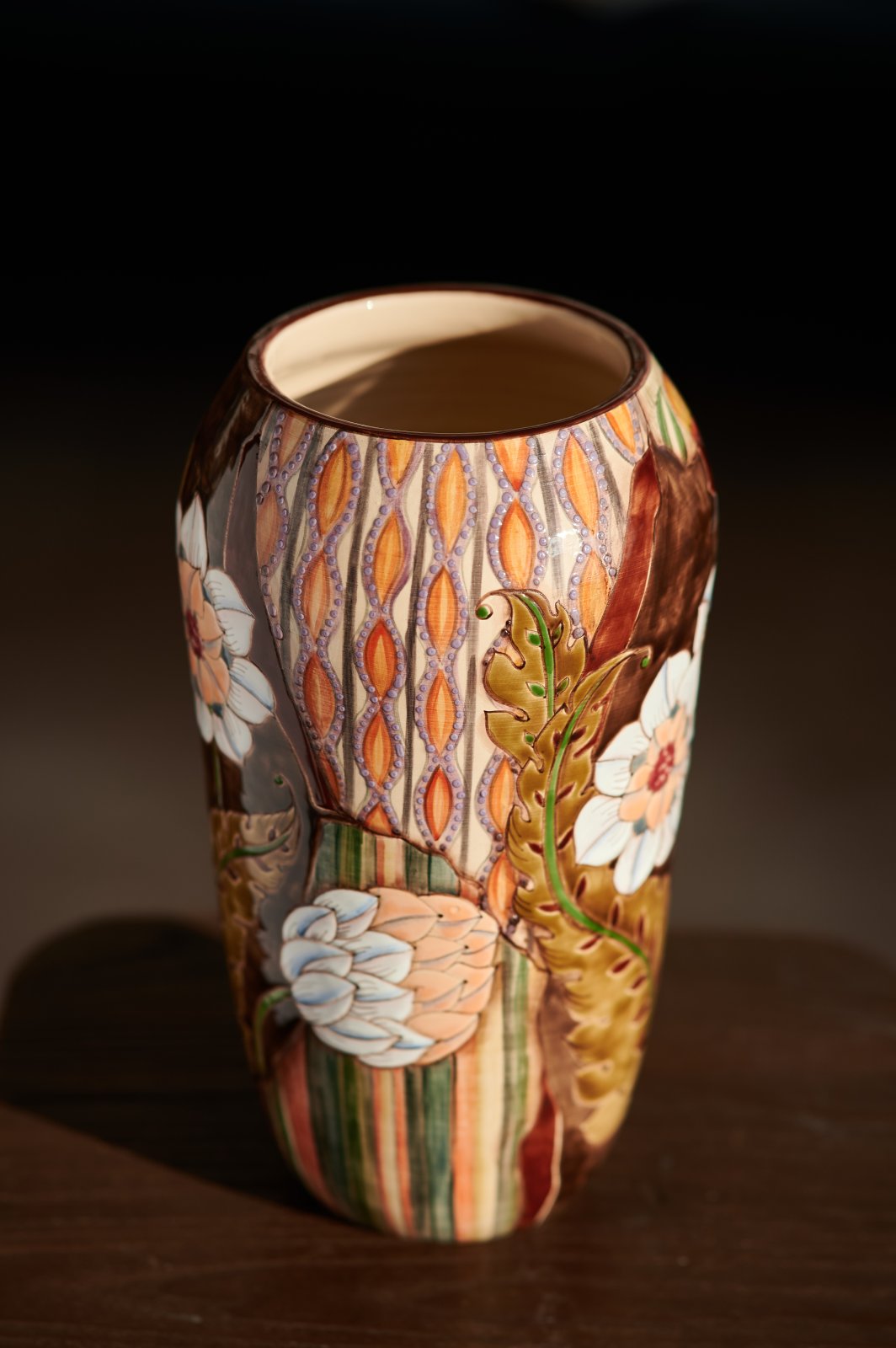
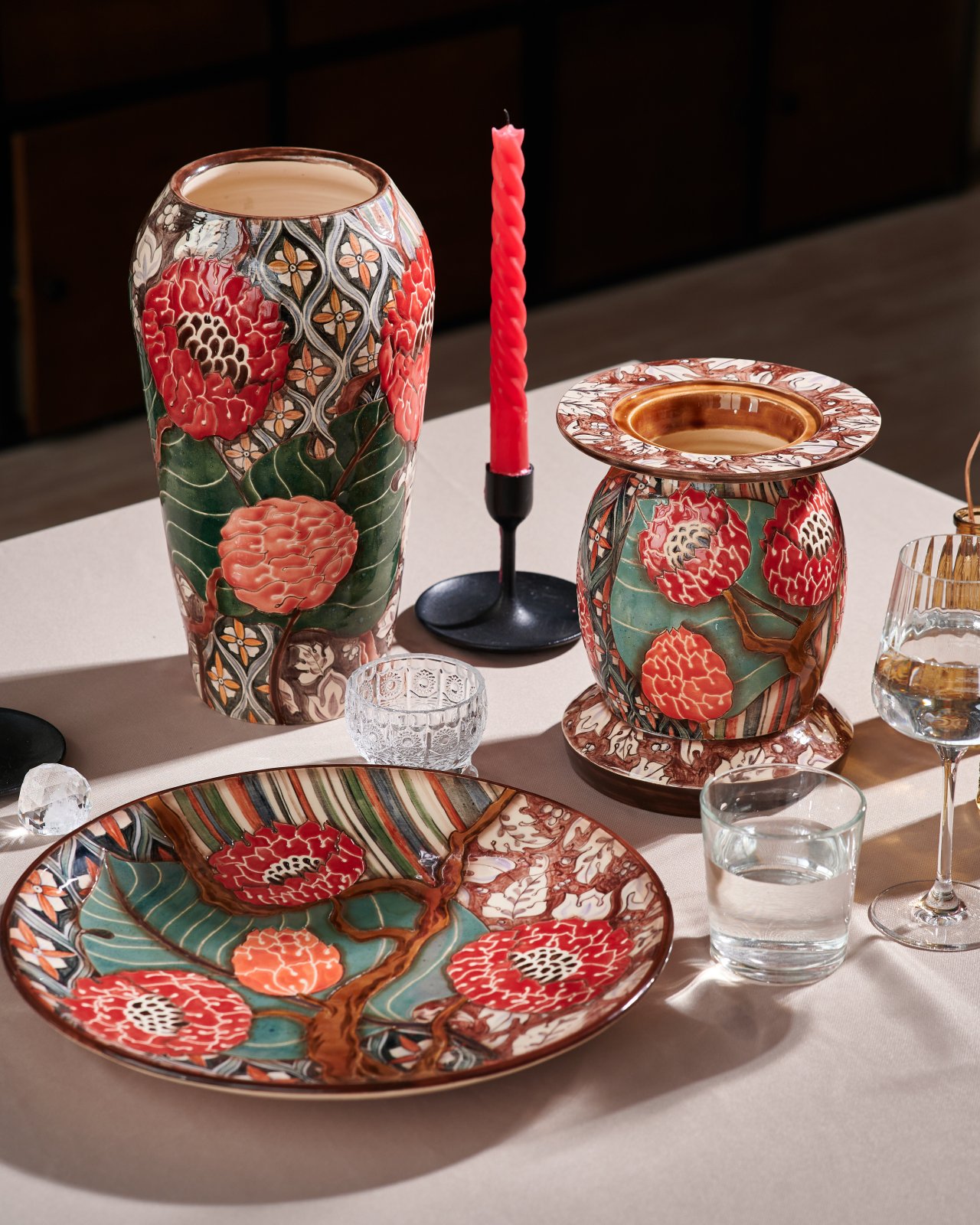
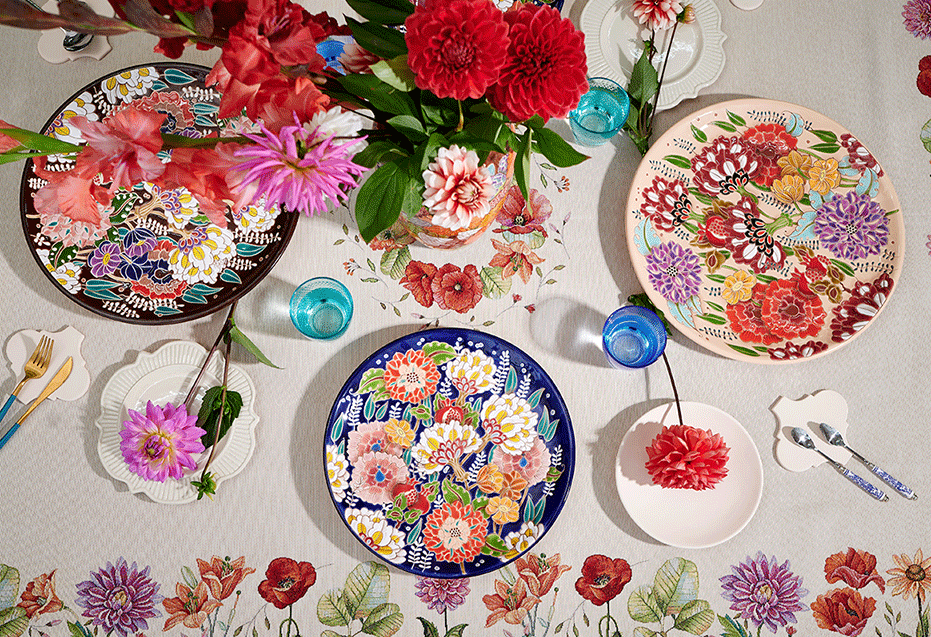
In my work, I combine underglaze painting, relief paste, glaze painting, and overglaze painting. In my case, overglaze painting emphasizes contours, details, and shadows. The other techniques create a multi-layered background, a watercolor effect, and interplay of textures and shades. The final design is embossed and shimmers in the sun with all its colors. This technique cannot be recreated by any machine or tool.
My pieces can be used both as serving plates and as wall decor. Handmade gifts never go out of style. Moreover, the value of designer pieces only increases over the years.
If you'd like to order Yantra.Keramika tableware, go to the "Catalog" section. There you'll find beautiful plates and other items, such as decorative vases.
Also, follow me on social media. There I share behind-the-scenes insights into the ceramics world, host giveaways, and offer recommendations for aesthetes. We all love beauty here, right?