
What is the process of making a plate?
Customers see my finished pieces. But what lies behind these blooming gardens, scarlet pomegranates, and birds of paradise? What do the plates look like at the very beginning?
Any ceramic plate, at first, is just a lump of clay. Not even a lump, but a handful: it will become a lump a little later.
Clay is like flour. First, water is added. Then the mixture is kneaded to form a "dough."
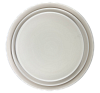
Then the clay is rolled out, creating the desired shape—in our case, a plate. Next, the piece needs to dry. This process takes about two days. When it has no moisture left, it is sent to a muffle kiln for the first, final firing. This takes about 12 hours, including slow cooling. At this stage, the plate is called a scrap piece; it can't yet be used for wall decoration or table setting. After cooling, glaze is applied to the surface, and the piece is fired again. From now on, it's real tableware, ready for everyday use. This is a simple dinner plate.
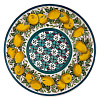
But for Yantra.Keramika, the fun begins now! Or rather, it started a little earlier: I paint the scrap plate with underglaze paints, creating a watercolor-like background effect. Then comes relief painting with glaze. And then overglaze painting. Between each stage, there's a firing that lasts many hours. So, it takes several days to create one plate. But it's worth it: this is how I achieve the multi-layered, three-dimensional effect.
Was it interesting? Should I tell you about the behind-the-scenes work of a ceramicist? Leave your reply on our social media :)